
What Happens to What You Have Built When You’re No Longer the One Holding it Up?
Every pastor has watched it happen at least once. A church built entirely around one gifted leader hums along for years, full and alive and growing, until that leader gets sick, retires, or passes on. And then, slowly or all at once, it just stops. The building is still there. The sign out front has not changed. But whatever made the place feel like a movement is gone.
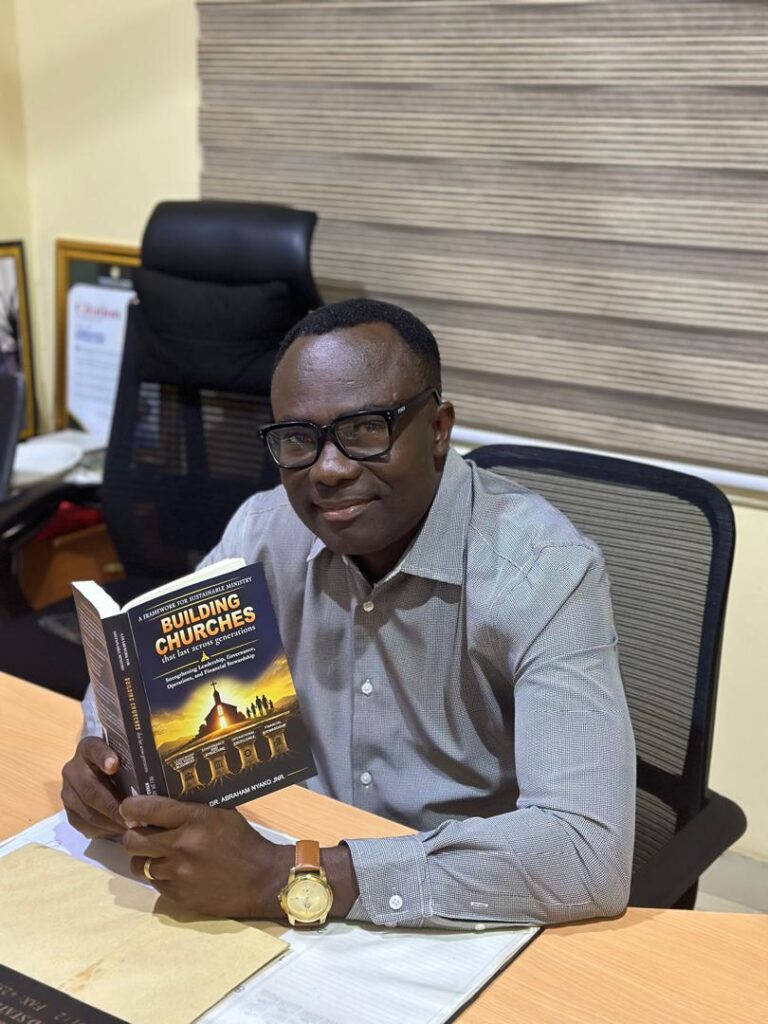
Our author for this spotlight has spent years thinking about why that happens, and more importantly, what stops it from happening. He is a pastor, but also a public health and organisational development specialist, and that combination shapes everything he has to say below.
His book argues something some church leaders do not want to hear: passion gets a church started, but it is structure that keeps it standing. In the conversation that follows, he talks about the pastor he once admired, the church that quietly closed its doors after that pastor died, and how that loss became the seed of everything he would eventually write.
Meet the Author
Before there was a book, there was a husband, a father of three, and a man who has spent his career moving between two worlds that most people keep separate.
I am a husband and father of three, a pastor, and a public health and organizational development specialist. At the heart of who I am is a desire to serve God and humanity. My pastoral ministry has shaped my passion for spiritual growth, leadership, and the development of people, while my professional experience has given me a strong interest in strengthening institutions and helping organisations become more effective and sustainable. These two dimensions of my life have increasingly come together in how I think about leadership, ministry, and organisational effectiveness.
But this love for words did not begin with sermons or strategy documents. It actually started on a stage, long before the pulpit called.
From a very young age. I was heavily involved in drama and poetry, and I enjoyed working with scripts and creating stories. Those early experiences helped me discover the power of words, storytelling, and creative expression. My writing has evolved over the years, but that early love for literary art has stayed with me.
That instinct for storytelling eventually found a new purpose: preserving the lessons he was learning in ministry and in institution-building, and putting them where other people could actually use them.
The desire to share my experiences and insights in ways that can strengthen both individuals and institutions. Through my professional and ministry work, I have learned lessons that I believe can help others navigate leadership, organisational development, and personal growth. Writing gives me a way to preserve those lessons and make them accessible to a wider audience.
Becoming a published author was never a question of if. It was a matter of when, and for a long time, when kept losing to everything else on his plate.
It has been a long-standing goal, but one I kept postponing – there was always another responsibility or reason to wait. What changed was a growing conviction that it was time to stop postponing and put the ideas and experiences I had accumulated over the years into writing. So the goal itself was never unexpected; the timing was. Eventually, the conviction became stronger than the reasons for waiting.
And outside the writing itself, the stage still calls to him.
Drama and theatre have always been a major source of creative inspiration for me. I enjoy the way theatre brings ideas, emotions, characters, and human experiences to life. It reminds me that communication is not only about what we say, but how ideas connect with people and become meaningful to them. My early involvement in drama and engagement with scripts continues to shape how I think about storytelling and communication today.
The Spark Behind the Book
The book started with a pattern he kept noticing in churches that had every reason to succeed.
The book grew out of the intersection of my pastoral ministry and my professional experience in public health, organisational development, strategic planning, and capacity building. As a pastor, I care deeply about the growth of the church. As a professional, I have seen firsthand how much leadership, healthy systems, governance, accountability, and sustainability matter to building institutions that endure.
Over the years, I noticed that many of the challenges churches face are not always about a lack of passion or spiritual commitment. Sometimes they come down to weak structures, poor systems, misaligned leadership, or weak stewardship. That observation led me to an important question: how can churches stay spiritually vibrant while also becoming organisationally strong and sustainable?
That question became the seed of the book. I wanted to bring my experience in ministry and institutional development together to give church leaders a practical framework for building churches that are effective today and strong enough to carry their God-given mission across generations.
But the real turning point, the moment that gave the whole project its emotional weight, came from a funeral.
Yes. One experience has stayed with me for years.
I was once unexpectedly invited to preach at a revival programme in a church I had never visited. It was vibrant, growing, and full of spiritual energy, led by a gifted, spiritually sensitive pastor who was clearly making a real impact. At the time, my own church was smaller, and I remember admiring what God was doing there.
Not long after, I developed a relationship with that pastor. He later became seriously ill and passed away. What happened to the church afterward affected me deeply: the momentum and vitality of the ministry gradually declined, and eventually the church closed.
That left me with a question I have carried ever since: what happens to a church when the leader who built it is no longer there? It showed me that spiritual passion, vision, gifting, and growth while essential are not always enough for a ministry to endure. Churches also need healthy leadership structures, governance, effective systems, and responsible stewardship that can carry the mission through seasons of transition.
That experience became one of the strongest inspirations behind this book. It convinced me that the true strength of a church shows not only in how well it functions while its key leader is present, but in what remains when leadership changes. Passion may ignite a church, but structure helps sustain its mission across generations.
Building Beyond the Pulpit
So what does a church actually do with that lesson?
The book’s central message is simple: passion ignites a church, but structure sustains it. A vibrant ministry can lose clarity, momentum, and stability when its vision is not backed by healthy leadership, good governance, effective systems, and faithful stewardship.
Around that idea, the book builds a practical framework of four pillars of long-term church effectiveness: Leadership and Vision Alignment, Governance and Structure, Operational Excellence, and Financial Stewardship. Readers will learn how to strengthen accountability, build sustainable ministry systems, steward resources wisely, and catch organisational weaknesses before they turn into crises. With practical illustrations, reflection questions, and a church effectiveness self-assessment, the book equips church leaders to build churches that are spiritually vibrant, organisationally resilient, and able to serve faithfully across generations.
Of everything in the book, one chapter sits closest to his heart, and it is not a chapter about theory. It is the one that hands the framework back to the reader and asks them to turn it on their own church.
Yes. Chapter 7, the Church Organisational Effectiveness Self-Assessment.
What makes this chapter especially important to me is that it moves the conversation from simply understanding organisational effectiveness to honestly examining where a church actually stands. It is easy for a church to assume everything is healthy because ministry is active, programmes are running, or the congregation is growing but activity does not always mean organisational strength.
The self-assessment lets leaders examine their church across the book’s four pillars: Leadership and Vision Alignment, Governance and Structure, Operational Excellence, and Financial Stewardship and identify both strengths and hidden vulnerabilities, including how weakness in one area can affect the others.
This chapter matters to me because its purpose is not to criticise churches but to build organisational awareness that leads to action – helping leaders move from assumption to informed assessment, identify what needs strengthening, and respond before weaknesses become crises. Ultimately, I believe healthy churches should not only ask, “Are we growing?” They should also ask, “Are we building something strong enough to sustain the mission God has entrusted to us?” That is why this chapter is especially close to my heart.
What Writing the Book Really Took
Ask most authors what the hardest part of writing a book was, and they will tell you it was the first draft. He will tell you the opposite.
The revision process. After finishing the initial manuscript, I had to read through it critically, often several times to make sure the ideas were clear, coherent, practical, and consistently tied to the book’s central message.
Writing the first draft turned out to be only part of the journey. The deeper work came in revisiting the material: challenging my own assumptions, cutting unnecessary repetition, sharpening concepts, strengthening the links between the four pillars, and making sure complex organisational ideas could be understood and applied by church leaders.
Throughout, I kept asking myself: does this genuinely help a church leader understand what needs strengthening, why it matters, and what they can do about it? That process was demanding, but it made the book clearer, more focused, and more practical.
That same honesty carries into how he talks about the process as a whole, surprises included.
How much deeper the writing process became once I moved beyond simply putting ideas on paper. I expected the main challenge to be writing the content itself, but I discovered that writing a book means continually examining, refining, and sometimes challenging your own thinking.
I was also surprised by how much the book evolved during revision. Some ideas became clearer, some had to be simplified, others needed strengthening. And publishing taught me that finishing the manuscript is only one part of the journey; turning it into a finished book takes patience, attention to detail, and a willingness to keep refining the work.
If he could go back and tell himself one thing before starting, it would not be about the writing at all.
Just how much time and patience the publishing process requires beyond writing the manuscript itself. Writing is only one stage – editing, reviewing, formatting, proofreading, cover design, production, and preparing the book for readers all need careful attention. Knowing this from the start would have helped me plan more realistically and appreciate that producing a quality book is a process, not a single event.
And with a full ministry and career already claiming his hours, making room for the book meant giving something up.
I had to learn discipline and intentional time management. With the demands of pastoral ministry, professional responsibilities, and other commitments, I could not simply wait for a convenient time to write. I had to deliberately create the time.
I also had to give up some personal time and learn to protect periods for thinking, writing, and revising without distraction. Perhaps the biggest lesson was that writing a book takes consistency more than occasional bursts of inspiration; there were times I had to write even when I did not feel particularly inspired. Ultimately, I learned that a book is not written only when you have time. You make time because the message is worth writing.
On Publishing, and What He’d Tell You
We asked him, honestly, what it was like working with us. His answer:
Very positive. What stood out most was their professionalism and commitment to ethical publishing practices. I appreciated how they approached the process with seriousness, transparency, and attention to detail. Their professionalism gave me confidence throughout the journey, and I valued having a publishing partner that understood the importance of both quality and integrity.
For anyone sitting on a finished manuscript and too nervous to do anything with it, he does not have much patience for waiting.
Do not let fear keep your message trapped in a manuscript. If you have written something you genuinely believe can add value to people’s lives, take the next step and seek professional guidance. Speak with a reputable publisher such as Crows Publishing, understand the process, ask questions, and let experienced professionals guide you through it. You do not need to know everything about publishing before you begin. What matters is being willing to take the first step and turn your manuscript into something that can reach the people who need it.
A Question for the Reader
We closed by asking him what he would want to ask a reader who had just turned the final page. His answer was a mirror, handed back to whoever picks up the book.
“After reading this book, do you see a difference between the spiritual vitality of a church and its organisational vitality and do you now see why a church should never neglect the systems that support its spiritual mission?”
That question captures one of the central burdens of the book. A church can be spiritually vibrant and yet organisationally vulnerable. My hope is that readers will see that organisational systems are not opposed to spiritual ministry when properly designed and stewarded, they create the stability and capacity through which the church can sustain its God-given mission across generations.
Conclusion
What stays with you after this conversation is not really the four pillars, solid as they are. It is the question underneath all of them: what happens to what you have built when you are no longer the one holding it up?
That is not a comfortable question for most church leaders, and it clearly was not an easy one for him to sit with either. You can feel the weight of that revival programme, and the pastor who later passed away, running quietly through nearly every answer here. Building something spiritually alive and building something organisationally sound were never in competition. They are the same job, seen from two different angles.
Want to buy the book or contact the author for collaborations or speaking engagement? You can reach him directly via:
📞 Phone/WhatsApp: +233-244-157-815
Have a manuscript of your own waiting to become a book?
If this story made you think about the message you have been sitting on, that is exactly the kind of work we exist for.
Explore our publishing services, check out our beginner’s deal, or get a quote to get started.